For a Suspension Clamp Manufacturer, the quoted product price is only one part of the final procurement cost. Importers must also account for packaging, inland transport, international freight, insurance, customs duty, taxes, brokerage, inspection, warehousing, and delivery to the project site. This guide gives purchasing teams a practical, step-by-step method for calculating the true landed cost of imported suspension clamps.
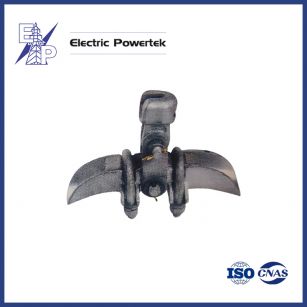
What purchasing teams need to know before calculating landed cost
Why the supplier unit price is not the final cost
Import buyers often compare suppliers using only the factory price. This can produce an incorrect result because a low unit price may be offset by higher freight, duty, packaging, payment, or delivery charges. Landed cost should represent the full cost of getting conforming suspension clamps to the required warehouse or project location.
- Product purchase price.
- Export packaging and labeling.
- Pickup from the supplier factory to the export port.
- Export documentation and terminal handling.
- International ocean, air, rail, or road freight.
- Cargo insurance and security surcharges.
- Customs duty, import tax, value added tax, or goods and services tax.
- Customs brokerage, inspection, testing, and port charges.
- Domestic transport from the destination port to the warehouse or job site.
- Storage, demurrage, financing, currency conversion, and other project-specific costs.
The main pain points behind landed cost calculations
Purchasing groups usually need more than a simple formula. They need a consistent method that allows different suppliers and delivery terms to be compared fairly.
- Supplier quotations use different Incoterms, so the buyer cannot tell which charges are included.
- Freight rates change by season, route, shipment size, and fuel surcharge.
- Suspension clamps may have different tariff classifications depending on material, design, and use.
- Taxes may be calculated on a customs value that includes freight and insurance.
- Packaging dimensions and gross weight are sometimes missing from the quotation.
- Small orders can have disproportionately high brokerage, handling, and delivery costs.
- Technical nonconformity can create replacement, reinspection, and delay costs that are not shown in the original quote.
What information and tools are required
Documents to request from the supplier
Request complete commercial and technical information before calculating the landed cost. The calculation is only as reliable as the data provided by the Suspension Clamp Manufacturer.
- Formal quotation with currency, validity period, payment terms, and Incoterm.
- Product model, application, conductor range, material, coating, and technical standard.
- Quantity per carton, carton dimensions, net weight, gross weight, and total volume.
- Commercial invoice and packing list format.
- Country of origin and proposed HS code.
- Product drawings, inspection records, certificates, and test reports.
- Production lead time and estimated shipping readiness date.
- Export port, preferred shipping method, and available delivery options.
Calculation tools for the purchasing department
- A spreadsheet with separate columns for each cost category.
- A current freight quotation from a freight forwarder or carrier.
- Official customs duty and import tax information for the destination country.
- An exchange rate source and a defined currency conversion date.
- A calculator for volume, chargeable weight, and cost per unit.
- A supplier comparison sheet using the same quantity, currency, Incoterm, and destination.
- A document checklist for customs, quality, and project delivery requirements.
Core landed cost formula
Use the following basic formula for an imported shipment:
Landed cost = product cost + origin charges + international freight + insurance + customs duty + import taxes + destination charges + inland delivery + other import costs
To calculate the landed cost per suspension clamp, divide the total shipment landed cost by the number of accepted units received at the final destination.
Landed cost per unit = total landed cost divided by accepted quantity
First step: Define the shipment scope and commercial basis
Confirm the exact product and quantity
Start with the exact suspension clamp model and quantity required for the project. Do not combine different models unless they have the same cost, packaging, tariff treatment, and delivery requirements.
- List each clamp model and product code.
- Record the required quantity for each model.
- Separate spare units, samples, replacement units, and production quantities.
- Confirm whether accessories, bolts, washers, inserts, and protective components are included.
- Confirm whether the quantity is quoted per piece, set, pair, carton, or kit.
Confirm the Incoterm and named location
Incoterms determine which party pays for transport, insurance, export clearance, import clearance, and delivery. The named place is equally important. For example, a price stated as FOB a specific port does not include the same costs as a price stated as DAP a named warehouse.
- EXW usually leaves most transport and export handling to the buyer.
- FOB generally includes delivery to the export port and export clearance, but not main international freight or destination costs.
- CFR generally includes ocean freight but not insurance or destination import costs.
- CIF generally includes cost, insurance, and freight to the destination port, but normally excludes import clearance, taxes, and inland delivery.
- DAP generally includes delivery to the named destination, while import clearance and import taxes may remain the buyer's responsibility.
- DDP may include nearly all delivery and import charges, but the buyer should verify whether the seller can legally act as importer of record.
Write the Incoterm and named location at the top of the spreadsheet. Never compare an EXW quote with a CIF or DDP quote without adding the missing cost categories.
Second step: Calculate the product and origin costs
Calculate the product purchase cost
Multiply the quoted unit price by the confirmed order quantity. Include any tooling, customization, special coating, testing, labeling, or certification fees that apply to the shipment.
- Convert the supplier unit price into the selected comparison currency.
- Multiply the converted unit price by the order quantity.
- Add tooling or setup charges allocated to the shipment.
- Add special inspection, testing, or certification charges.
- Subtract only discounts that are contractually confirmed.
Example: If 10,000 suspension clamps cost 2.80 currency units each, the product cost is 28,000 currency units before freight, duty, taxes, and other charges.
Add export packaging and origin charges
Origin charges can be included in some Incoterms and excluded in others. Ask the supplier or forwarder to identify each charge separately.
- Export cartons, pallets, crates, and moisture protection.
- Product labeling and shipping marks.
- Factory loading and local pickup.
- Export documentation and certificate fees.
- Origin terminal handling charges.
- Export customs clearance.
- Pre-shipment inspection or third-party quality inspection.
If the supplier provides only one combined charge, request a cost breakdown. A separate breakdown makes supplier comparison and future negotiation easier.
Third step: Calculate freight, insurance, and shipment-based costs
Determine the shipment weight and volume
Freight is affected by both weight and volume. Suspension clamps are often metal products, so gross weight can be more important than volume for some transport modes. Packaging must be included in the shipping data.
- Record the number of cartons, pallets, or crates.
- Record the external length, width, and height of each package.
- Calculate package volume using length multiplied by width multiplied by height.
- Add the volume of all packages to obtain total cubic meters.
- Record total net weight and gross weight.
- Ask the forwarder whether the shipment is charged by actual weight, dimensional weight, or container rate.
Calculate international transportation
Obtain a freight quote based on the same shipment details used in the supplier quotation. The freight quote should state the route, transport mode, validity period, included surcharges, and destination point.
- Ocean freight for full container load or less than container load.
- Air freight for urgent or low-volume shipments.
- Rail or road freight where the route and border requirements allow it.
- Fuel, security, peak season, congestion, and documentation surcharges.
- Container, pallet, consolidation, or deconsolidation fees.
Add cargo insurance
If insurance is not included under the selected Incoterm, add it as a separate cost. Insurance may be calculated as a percentage of the shipment value or as a minimum fixed premium. Confirm the coverage level and exclusions, especially for water damage, theft, handling damage, and delayed delivery.
For budgeting, record the insurance rate, insured value, minimum premium, and currency. Do not assume that carrier liability is the same as cargo insurance.
Fourth step: Calculate customs duty, taxes, and destination charges
Verify the HS code and customs value
Ask the importer, customs broker, or relevant customs authority to confirm the appropriate HS code. The classification may depend on the suspension clamp's material, construction, use, and whether it is imported as a standalone fitting or as part of a cable accessory assembly.
- Describe the product accurately, including material and application.
- Check the proposed HS code against the destination country's tariff database.
- Confirm the applicable duty rate and any preferential trade agreement.
- Check whether a certificate of origin is required to claim a reduced rate.
- Confirm whether customs uses the invoice value, transaction value, or another valuation method.
A common customs value is based on the product value plus certain freight and insurance costs to the import border. The exact method varies by country, so the final calculation should be confirmed by a qualified customs professional.
Calculate customs duty
Customs duty is generally calculated as:
Customs duty = customs value multiplied by duty rate
For example, if the customs value is 32,000 currency units and the duty rate is 5 percent, the estimated customs duty is 1,600 currency units.
Calculate import tax and value added tax
Import tax may be calculated on a base that includes the customs value, duty, and selected destination charges. Verify the local tax formula before finalizing the estimate.
Import tax = taxable import base multiplied by import tax rate
Record recoverable and nonrecoverable taxes separately. A recoverable value added tax may affect cash flow even when it is later claimed as a tax credit. A nonrecoverable tax should normally remain in the landed cost.
Add destination and clearance charges
- Customs broker service fee.
- Import entry and documentation fee.
- Destination terminal handling charge.
- Port security and infrastructure fees.
- Customs inspection and storage.
- Demurrage and detention if the shipment is delayed.
- Quarantine or special inspection where applicable.
- Local delivery from port, airport, rail terminal, or border crossing.
Fifth step: Build the landed cost spreadsheet and compare suppliers
Recommended spreadsheet structure
Create one row for every cost category and include the amount, currency, data source, Incoterm responsibility, and whether the amount is estimated or confirmed.
- Supplier product cost.
- Tooling and special production charges.
- Export packaging.
- Origin pickup and export clearance.
- Origin terminal charges.
- International freight.
- Insurance.
- Customs duty.
- Import tax.
- Brokerage and destination handling.
- Inspection and testing.
- Storage and demurrage allowance.
- Final inland delivery.
- Bank charges and currency conversion cost.
- Contingency allowance.
- Total landed cost.
- Landed cost per accepted clamp.
Compare offers on an equal basis
Normalize every supplier offer before deciding which one is cheaper. Use the same quantity, destination, currency, delivery deadline, quality requirement, and tax treatment.
- Convert all offers into one currency using the same exchange rate date.
- Convert all offers to one delivery basis, such as delivered warehouse cost.
- Use the same freight assumptions for suppliers with comparable shipment terms.
- Include quality inspection, certificates, and compliance testing in every relevant offer.
- Calculate cost per accepted unit rather than cost per shipped unit.
- Run a sensitivity check for freight increases, exchange rate changes, and duty changes.
Include quality and delay risk in purchasing decisions
The lowest calculated landed cost is not always the lowest total procurement cost. If a supplier has inconsistent dimensions, poor coating quality, incomplete certificates, or long response times, the buyer may face replacement freight, project delays, field labor, and emergency purchases.
Consider adding a separate risk allowance for uncertain costs. Keep the base landed cost and risk-adjusted landed cost in different rows so management can see the difference between confirmed expenditure and purchasing risk.
Sixth step: Validate the calculation before placing the order
Perform a commercial review
- Confirm that the quotation is still valid.
- Confirm the final quantity and delivery schedule.
- Confirm the Incoterm and named location in the purchase contract.
- Confirm which party is responsible for export and import clearance.
- Check freight validity and possible peak season surcharges.
- Confirm payment, bank, and currency conversion fees.
Perform a technical and compliance review
- Verify conductor diameter range and rated mechanical load.
- Verify material, coating, corrosion resistance, and temperature requirements.
- Confirm compliance with the project specification and applicable standard.
- Review drawings, samples, inspection plans, and test reports.
- Confirm required markings, packaging labels, and traceability information.
- Check whether local approval or electrical utility registration is required.
Reconcile the estimate after delivery
After the shipment arrives, compare the estimated landed cost with the actual invoice, customs entry, freight bill, broker invoice, tax payment, and delivery receipt. Record the difference by category. This creates a more accurate cost model for the next order and helps identify suppliers or logistics providers that regularly create unexpected charges.
Common landed cost mistakes to avoid
Mistake 1: Comparing unit prices without comparing Incoterms
A lower EXW price may be more expensive than a higher CIF or DAP price after transport and destination costs are added. Always convert offers to the same delivery point.
Mistake 2: Using the wrong HS code or duty rate
Do not copy a tariff code from an old shipment without checking the current classification. A wrong code can cause duty underpayment, penalties, customs delays, or a revised tax assessment.
Mistake 3: Ignoring packaging weight and volume
Freight is calculated from shipping data, not only the product weight. Request gross weight, package dimensions, pallet count, and loading details from the supplier.
Mistake 4: Forgetting destination charges
Port handling, brokerage, documentation, inspection, storage, and local delivery can materially increase the final cost. Ask the forwarder for a destination charge schedule before shipment.
Mistake 5: Treating recoverable tax as a permanent cost
Separate recoverable tax from nonrecoverable tax. The accounting treatment may differ from the cash payment required at import.
Mistake 6: Dividing by the ordered quantity instead of the accepted quantity
If units are damaged, rejected, or missing, divide total landed cost by the number of accepted units received. This gives the true usable unit cost.
Mistake 7: Leaving currency risk out of the calculation
A change in the exchange rate between quotation, payment, shipment, and customs clearance can affect the final cost. Use an approved exchange rate and include a reasonable sensitivity range.
Mistake 8: Ignoring delivery and quality risk
Late delivery, incomplete documents, and nonconforming clamps can create costs that are much higher than the original price difference. Include quality controls and contingency planning in the sourcing decision.
Practical landed cost example for imported suspension clamps
Example assumptions
- Order quantity: 10,000 suspension clamps.
- Product price: 2.80 currency units per clamp.
- Origin packaging and export charges: 900 currency units.
- International freight: 2,400 currency units.
- Insurance: 180 currency units.
- Customs value: 31,480 currency units.
- Duty rate: 5 percent.
- Destination handling and brokerage: 1,050 currency units.
- Inland delivery: 700 currency units.
- Import tax: calculated separately according to local rules.
Calculation sequence
- Product cost = 10,000 multiplied by 2.80, which equals 28,000 currency units.
- Pre-duty logistics cost = 900 plus 2,400 plus 180, which equals 3,480 currency units.
- Customs value = 28,000 plus 3,480, which equals 31,480 currency units.
- Customs duty = 31,480 multiplied by 5 percent, which equals 1,574 currency units.
- Subtotal before import tax = 28,000 plus 900 plus 2,400 plus 180 plus 1,574 plus 1,050 plus 700, which equals 34,804 currency units.
- Add import tax using the destination country's approved taxable base.
- Divide the final landed cost by the number of accepted units received.
This example is for planning only. Actual duty, tax, valuation, freight, and local charges must be confirmed for the specific destination, product classification, shipment route, and delivery term.
How a Suspension Clamp Manufacturer can support accurate landed cost planning
Request a quotation package that supports import costing
A professional Suspension Clamp Manufacturer should provide clear commercial, packaging, and technical data so the purchasing team can build a reliable landed cost model. Ask for the following information in every quotation:
- Unit price and price basis.
- Incoterm and named location.
- Minimum order quantity and quantity price breaks.
- Net weight, gross weight, carton dimensions, and total volume.
- Production lead time and shipment readiness date.
- Country of origin and product classification information.
- Available inspection documents and compliance certificates.
- Packaging photos or packing specifications when the shipment is large.
Electric Powertek can help purchasing teams evaluate product specifications, shipment data, and commercial assumptions before they issue a purchase order. Buyers should still confirm customs classification, taxes, and local import requirements with their broker or customs authority.
Accurate landed cost calculation turns a supplier quotation into a complete sourcing decision. By following each step, separating confirmed and estimated charges, and checking the final figures after delivery, purchasing teams can control budgets and select the most reliable Suspension Clamp Manufacturer for their project.

 Previous: None